Saturday, June 6, 2015

Directed Study Brief

It seems we have been set a very intriguing challenge for our directed study. Rather than spend time in workshops learning something different we have been set the task to research our "dream job" and create simulated work to impress them. 
 This instantly feels enjoyable, a task to research your favourite company, explore the work they create and try to replicate similar pieces to impress them is my definition of a directed study plan that inspires charisma in your work.
The "brief" itself is below detailing what to consider and to look in to:
Your challenge: 
A) Find your ‘dream’ job. Whichever games company, wherever in the world, no matter how big or small.
B) Research the requirements for the position. This includes skill-set, portfolio, pipeline / workflow, examples of work, etc.
C) Make something to impress them….and us. 
D) Post your work to the Facebook group on 15th June.

Be realistic in what you can achieve in the time and use the techniques we've taught you throughout the year. 
Three weeks is enough time to complete and polish a complete asset or a body of concept art (not just a single illustration of your first idea – you know who you are – and so do we!). 
If you are creating concept art, iteration is a must! 
What about incorporating Maya into your workflow for block outs? Or ZBrush?
If you are modelling an asset, stick to a typical polycount for the company’s usual work – this goes for no. / size of textures, also. 
Don’t forget your reference / initial design(s)

Thoughts:
Excitement aside I have just the company in mind but potentially not the job itself and will need to research into the roles they have.
The company I plan to study and create a body of work for is the Washington based 24 year old AAA studio "Bungie" creators of such work as "Marathon", the well known "Halo" franchise and most recently the new IP "Destiny".
As their most recent game franchise is "Destiny" and one they have intended to last for 10 years with more installments constantly being created to achieve this, it is wise to cater the work I will create over this period of study to be related to this game's universe and all it resides in.
I will begin my study by looking into the careers they are offering, the requirements for that which interests me, and finally creating the appropriate work to act as pieces to impress this potential employer. 

Friday, June 5, 2015

Step.1 Research Part 1

Firstly I wanted to research fully what roles "Bungie" is currently offering and what appeals to me. The career of a "concept artist" has intrigued me ever since seeing the larger picture of how games are created. The early design processes of a game are what intrigues me the most and Bungie's current game "Destiny" is rich with new ideas, designs, and marvelous creations littering its environments. Due to my admiration of the game's designs and the role of being involved in the their creation being available it seemed only right to tailor my directed study around the role of a concept artist working on "Destiny".

Below are the responsibilities, required skills and details of the role of a concept artist at Bungie.  

Concept Artist

Bungie is looking for an exceptional concept artist who will work closely with the Art Director and Art Leads to establish the style and feel for the game universe in exciting new Bungie titles. You will also work closely with the production art team to help them envision what the finished results can be for the in-game content they are creating. As the ideal candidate, you should amaze us with creative designs and artwork and have the capability to inspire greatness in those around you. 

Responsibilities

  • Collaborate closely with the Art Director and other concept artists to produce quality designs that define and expand the look of the game. 
  • Create concept art for use by production artists to create their game content. 
  • Create thumbnails, sketches, model sheets and production paintings within deadline. 
  • Ensure that concept art is consistent with defined visual style for the game. 
  • Contribute original visual design ideas throughout pre-production and production. 
  • Create additional illustrated concepts for marketing and PR needs. 

Required Skills

  • Ability to quickly iterate concepts given input from the Art Director. 
  • Professional attitude and an ability to take constructive criticism. 
  • An exceptional understanding of mood, lighting and architecture with a keen eye towards form, shape, structure, and silhouette in regards to illustration and design.
  • Superior eye for light, value, composition, color, staging and detail in environmental design. 
  • Strong foundation in the traditional arts, including, but not limited to, figure drawing, landscape painting, and illustration. 
  • The ability to carry an idea from the conceptual phase to the finished illustration and an understanding of translating these ideas to real-time game content. 
  • Self-driven, good communicator and a great team-player. 
  • A passion for games. 

Nice-to-Have Skills

  • Strong understanding of character proportion and costume design. 
  • Experience with Photoshop, Painter. 3D software knowledge not an absolute requirement. 
  • AA/BFA preferred, or at least demonstrates through portfolio an industry standard level of art. 

Upon looking at the requirements for this role I definitely see it to be a level I believe I can eventually achieve but do not currently fulfill at my present skill level.

Some of the final pieces are beyond excellent and a far way from what I'm able to create so rather than using finished marketing pieces and beauty shots for PR I will look deeper into the earliest pieces in the game where general designs and mood's were established and less at the higher quality polished pieces.


Pieces such as above are excellent images in capturing the feel of the game but act more as marketing pieces and I want to focus on the role the concept artist will have which is design everything in these images and for the game. 


For example almost everything in this piece had to be designed from scratch such as the alien armour and weapons as well as their appearance beneath. Same goes for the mythical sci-fi humans in the scene and all their apparel and gear.

The game is constantly expanding with new locations and missions being introduced gradually. One thing that Destiny boasts is the end game content which essentially ends up being a player driven grind to collect new items. Among these items are the beautifully designed pieces of mythical sci-fi armour and weapons. With each new expansion comes a new arsenal of gear and spaceships to add to your collection and these new vehicles and assets are constantly needing to be generated by the artists at Bungie. These designs need to be fresh and intriguing as they will often be in the hands of a player from hours on end and are crucial to follow the look and feel of the game as well as stand out as marvellous new pieces that players crave to try and acquire.

Thoughts:

As a result I feel during my directed study I will focus on these end game pieces and will attempt to design some new and interesting weapons, armour, and vehicles using the pre-existing themes of the game as well as adding my own personal design flare to each creation.


Thursday, June 4, 2015

Step.1 Research Part 2

To begin with I need to research the talented artists at Bungie and the work they have produced over Destiny's production and the work they are still creating.

As I am focusing on the early conceptual work I will need to dig up images of early weapons silhouettes, character mood pieces and armour iterations, as well as preliminary ship designs in the game.

Initially the names I have gathered are "Isaac Hannaford", "Joseph Cross", "Dorje Bellbrook", and "Jesse van Dijk".

All of them are superb 2D and 3D concept artists at Bungie and have created a variety of work.

Joseph and Jesse have done a variety of incredibly detailed and polished pieces likely used for marketing and art pieces to represent the overall mood and feel of the game and solidify its environments in a beautiful way. I've collected a series of some of their environmental work showcasing the best sights and visuals in the game represented through their artwork.


Jesse van Dijk:


Jesse's work encompasses all that Destiny is and many of his paintings have been represented perfectly in the game and are instantly recognisable on sight.

These incredibly polished pieces however are very far down the pipeline and probably don't get past from artist to artist but are used for pitches, conceptual art compilation books, and hype generators. I'll use these images to help ground the mood and setting of my work but won't be used as direct references for design and iteration ideas.


Joseph Cross:


Similar to Jesse's work, Joseph has created some excellent character, vehicle and environment designs and will also be used as atmospheric pieces to ensure my designs are grounded on the world they would inhabit.


Isaac Hannaford and Dorje Bellbrook's pieces are far earlier in Destiny's timeline and a lot of their released work shows the conceptual stages of an idea and how it progresses to the finished product. These piece will be a lot more helpful in influencing my designs as they are created to illustrate their design ideas as opposed to a piece created for the audience and to sell the game.

Bellbrook's work is created to an impeccable quality often showcasing the iterations from his initial ideas to the fully fleshed out concept and its intended depiction for the game.


Dorje Bellbrook


Bellbrook has an excellent illustrative style to his work which lends itself perfectly to creating concepts for environments or levels that are easily understandable. The game of destiny is a mythical sci-fi adventure set in our solar system with the bodies of mars, earth, venus, mercury, and the moon as locations that can be explored by the player. Bungie had a difficult yet exciting job of turning a lot of these locations into something more that spheres of rock and gas.

For example Bellbrook has created several ideas for how lost human colonies could look like sunken in the jungles of venus, or in the dunes of mars, or the ruins of old earth.


These pieces really set the mood for the planetary environments. I love the comic book sort of style his concepts have. Though his early ideas begin as simple line work such as below its the finished ideas with the applied colour palette that really solidify the idea and its potential application to the game.


Often he will take his ideas into a 3D programme like Maya and create a block out to aid in his work generation and gain a better understanding in how the idea may work in a level or mission.


Dorje's work has given me excellent insight into environment production and its development in the conceptual stage.

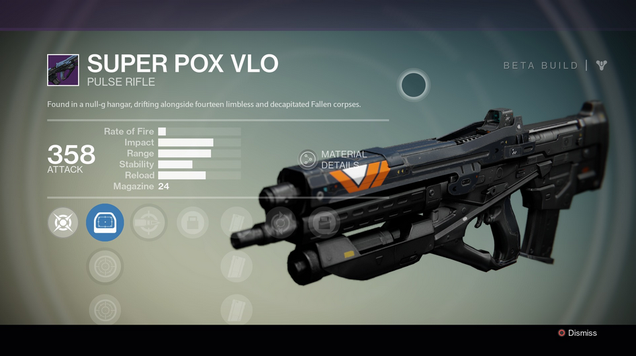
However Hannaford focuses on far smaller assets in the game. Much of his work is centred around pieces that the player will use or interact with rather than be encased by. I'm talking about the various weapons used by the player throughout Destiny.

Below is an example of some early weapon frame ideas for the game created seemingly by combining existing modern day weapon parts together to create interesting and unique designs for futuristic human weapons.


I have collected and compiled a series of early silhouettes Hannaford has created for weapons some being developed further to refine their appearance to match the intended feel and functionality of the weapon.


Though many of the weapons aren't seen in the game its very clear that many of the shapes and components invented at this stage are seen in the final model as well as obviously having definitive features from modern stay weaponry to ensure they feel human and recognisable.

For example it is obvious that Hannaford used references of existing gun designs to influence his own ideas and concepts for the human arsenal he would need to generate.


 Above showcases how many sub machine guns or automatic rifles would act as the base silhouette for the weapons with even more crude objects such as knives or blades would help develop the weapons features.

This will clearly be something I need to consider when generating my own designs. Another set of stages Hannaford will also go through is the classic development from an interesting design, to a more developed and polished design to finally creating a simplistic 3D version of the weapon to finalise on how it may appear in game.


Destiny also creates weapons that the player will potentially choose for their cosmetic appearance as well as its function and so colour and design iterations also need to be created for the cosmetic pieces of the weapon that aren't essential to its functions.

I've assembled some examples of this in Hannaford's work:


Of all the artists researched currently I feel Isaac has the best example of his work flow and how his designs are generated as well as not being overcomplicated in its presentation and allows a viewer to understand the concept and visualise coherently how it could be implemented in game.

Thoughts:

Researching these extremely hard working and talented artists has really helped me gain a greater understanding of the world of Destiny and how it has been forged. All of their work is excellent and Hannaford's is sure to be used as my primary source of reference and inspiration when attempting to design one or two weapon concepts. Other items I am interested in are the various armour pieces created in a modular way for the game as well as the ships and vehicles the player can own. For character and armour work I would certainly have a greater look at "Daniel Chavez" as he has some excellent alien concepts or another artist "Ryan DeMita" for inspiration and reference as well as some of his work is also in ship iterations. Same goes again for Hannaford as he also has several excellent conceptual ideas for alien ships.

For now however and for this period of directed study I want to focus on weapon design as it is one of Destiny's key traits as it is a first person shooter and thus the generation and implementation of fun and unique weapon designs is essential to this game's mechanics and engagement with the audience.

In my next post I will hopefully have generated some silhouettes for some weapon designs and proceed to develop them further until I have some finished and grounded designs ready to be polished and made presentable as a portfolio pieces and potentially to impress and employer such as Bungie.


Wednesday, June 3, 2015

Step.2 Silhouettes

So to begin with I looked back at how Hannaford had taken inspiration from real weapon designs and using the world of destiny he combined many of the shapes and decals already established and applied them to these weapons to create designs that would work well in the game.

To begin my silhouettes I followed a similar process. I began with a stock image of some silhouettes of real modern military weapons and used these as the base frame to begin a basic design around.


I then began to overlay a more Destiny friendly design over these weapons. The arms in destiny are often covered by cosmetic metal with more organic shapes than what we see in real weaponry yet maintains crude and exposed areas of metal seen in modern arms.

An example is below:


Destiny's weapons are also built in a very modular way with variants often being created by removing or adding a piece and replacing it with an alternative thus creating a different version of the weapon. I tried to keep this in mind when creating these simple silhouettes and how parts such as stocks or sights could be removed or changed to create a similar yet different version of the weapon.


So I began by creating a low opacity block out over the original silhouette and then followed by hiding the image beneath and allowing my self the creative freedom to remove, supplement or exaggerate areas to make it different from the original. I also used pre-existing examples of weapons in Destiny as influence to ensure my design would seem as if they fit in the Destiny universe as well as differ from them enough so as not to end up with weapons that seem too similar to already existing designs.

Thoughts:

I am pleased with the initial silhouettes yet feel they obviously need further development from this stage as I feel they don't have quite enough of the traits seen in current destiny weapons and still feel less sci-fi then I would like.

The next stage will be to take a handful of my favourite designs from this set, over line the block outs to identify the different parts and segments and through that adjust the silhouettes to make them both more functional, if necessary, or to enhance that "Destiny" look to ensure the weapons do not seem out of place in the game.

Tuesday, June 2, 2015

Step.3 Developing

So I have chosen 6 designs I feel have the most potential for development, can be altered further to fit the Destiny world, and act as interesting new designs.


These 6 were the designs I felt worked. However, every gun in Destiny, despite how quirky or exotic it may look would fall into a class of weapons just like how in reality you have sniper rifles, sub machine guns etc.

This was something I should have considered a little more when creating these silhouettes. There are currently 3 weapon classes in the game and then 10 sub classes within this.
They are incredibly simple to understand and are as follows:

Primary Weapons:
  • Auto Rifles
  • Scout Rifles
  • Pulse Rifles
  • Hand Cannons
Special Weapons:
  • Sniper Rifles
  • Shotguns
  • Fusion Rifles
  • Side Arms
Heavy Weapons:
  • Rocket Launchers
  • Heavy Machine Guns

Now when looking at my weapon silhouettes and pre existing examples of each subclass I feel I am able to place each of these 6 silhouettes into a subclass based off their appearance and resemblance to these examples.


The weapons have been labelled and assigned a subclass and will likely have their appearances altered further to solidify the weapon design to its subclass.


  1. Sniper Rifle
  2. Exotic Scout Rifle
  3. Auto Rifle
  4. Shotgun
  5. Pulse Rifle
  6. Auto Rifle
With some tweaks and adjustments I feel each of these weapons will fall into their respective class nicely and will also have the Destiny look I am hoping for in my designs.

Monday, June 1, 2015

Step.4 Finalising

I took my favourite 6 and created outlines over them to define their individual parts, segments and give clearer understanding as to how the weapon looks.


I really enjoyed this segment of the development as it caused the weapons to feel more functional and obviously gave me a better insight into how they will eventually look.

At this point I felt it would be helpful to add colour to the designs. For this directed study I wanted to focus on a single weapon and create a couple of colour iterations for that design.

I decided that the very top design, the "sniper rifle" concept would be the most interesting and fitting design to the destiny world with plenty of plating and cosmetics to enjoy colouring.


This was the first colour over of the first weapon design.

In the end I created 5 more and compiled them together in a composition of the original silhouettes, the over lone drawings, and then the final 6 colour iterations of the first weapon.


I have compiled the 6 colour iterations for a better view


I was very pleased with the colour outcome of the 1st concept and the deep red and white and orange designs were my two favourites in the end as I felt they fit the destiny universe the best, displayed the vibrant and exciting colours found in the weapons in the game.


Thoughts:

That's it for now. The directed study all in all was a very enjoyable experience and I definitely plan to continue this work and research past the directed study

I hope to potentially come up with more ideas, create a 3D model of one of these weapons perhaps, and even experiment with armour or ship designs and continue to surround myself in the world of Destiny.

Bungie has and will likely always be my end goal. i have loved their games ever since the first time I played Halo: CE and will continue to hone my skills and create pieces to help me get there. It's a long journey but one that I hope through time and hard work will yield the results I've always hoped for.